
The most significant factor determining the success of a golf facility is often invisible to the naked eye. Efficient drainage planning is the lifeblood of Golf Course Construction , acting as the silent engine that keeps the facility operational through adverse weather. Without a robust system, the strategic vision of a Golf Course Design can be quickly undermined by waterlogging and turf disease, which severely compromises the intended Playability . This critical infrastructure must be integrated during the early Masterplanning phase, ensuring that the natural topography is utilized to direct surface and sub-surface water effectively. Modern drainage solutions are also a core pillar of Sustainable Golf, as they prevent nutrient runoff and allow for the efficient collection and recycling of rainwater. During the build, the precision of the earthworks ensures that every contour serves a dual purpose: providing a strategic challenge and a functional conduit for moisture. This synopsis explores how technical drainage mastery protects the developer’s investment by extending the playing season and ensuring a consistent, firm surface. By prioritizing the “engineering under the turf,” developers can guarantee a world-class experience that remains resilient against the elements, securing the course’s reputation for decades to come.
While golfers admire the lush fairways and intricate green complexes, the true quality of a course is defined by what happens underground. In the realm of Golf Course Construction , drainage is the most critical infrastructure component. A poorly drained course suffers from soft ground, muddy areas, and eventually, the death of the turfgrass due to root rot. This not only ruins the aesthetic but also forces frequent closures, leading to lost revenue and a tarnished reputation. Proper drainage ensures that the soil remains aerated, allowing the grass to grow deep roots and remain resilient under the stress of heavy foot traffic and maintenance machinery.
The secret to effective water management starts long before any pipe is laid; it begins during Masterplanning . At this stage, architects conduct detailed hydrological surveys to understand how water moves across the property. This data informs the Golf Course Design, allowing the routing to follow natural valleys and drainage lines. By working with the land’s existing “plumbing,” developers can reduce the cost of artificial systems. A well-conceived master plan ensures that water is moved away from critical playing areas, such as greens and tees, and directed toward retention ponds or natural wetlands where it can be managed safely without impacting the game.
The strategic quality of a course is heavily dependent on its surface firmness. High Playability requires turf that is dry and stable, allowing for the “bounce and roll” that makes the game exciting. When water lingers on the surface, it creates “slow” conditions and prevents the ground game from being a viable strategic option. Furthermore, moisture-laden greens lose their speed and consistency, frustrating the golfer. By ensuring rapid water removal through professional drainage, the design remains true to its intent. This reliability ensures that the course offers a fair and predictable test of golf, regardless of whether it rained an hour ago or a week ago.
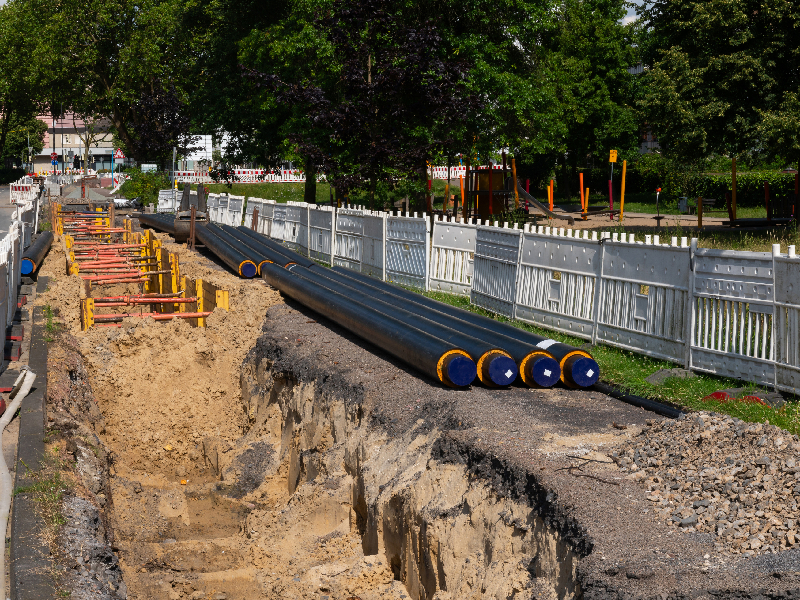
During the physical Construction phase, the implementation of sub-surface drainage is a high-precision task. This typically involves the installation of a network of perforated pipes, often laid in a “herringbone” or “grid” pattern, surrounded by specific gravel and sand layers. This system pulls excess moisture from the root zone, preventing saturation. For greens, the “USGA-style” construction—a layers-based approach—is the gold standard for ensuring moisture control. These technical build standards require expert supervision to ensure that the pipes are graded correctly and that the layers are not contaminated, guaranteeing that the system remains functional for the entire life of the course.
Modern drainage planning is a cornerstone of Sustainable Golf . Rather than simply discarding runoff, contemporary systems are designed to capture and filter water. This recycled water is then stored in irrigation ponds, significantly reducing the course’s reliance on local municipal supplies or groundwater. Additionally, efficient drainage prevents fertilizers and pesticides from being washed into local water bodies, acting as a natural environmental filter. By treating water as a precious resource rather than a waste product, the facility enhances its ecological standing and reduces long-term operational costs, proving that engineering excellence and environmental responsibility go hand in hand.
A dry course is a healthy course. Excess moisture is the primary driver of turf diseases, such as Pythium and various fungal outbreaks. By maintaining a balanced moisture level, the maintenance team can significantly reduce their reliance on expensive chemical treatments. This contributes to the long-term Future Maintainability of the facility. Furthermore, good drainage prevents soil compaction, which is a major issue on high-traffic fairways. When the sub-surface is stable, maintenance equipment can move across the turf without causing ruts or damage. This operational efficiency ensures that the course remains in peak condition with less effort and lower expenditure over time.
At GDI Group, we view drainage not as an afterthought, but as the foundation of our Golf Course Design philosophy. Our team of engineers and architects work in tandem to ensure that every contour on the course serves a functional purpose. We specialize in creating high-performance sporting landscapes that thrive in even the most challenging climates. By combining advanced hydrological modeling with expert Construction oversight, we ensure that our courses are “all-weather” facilities. Our commitment to quality means that we never cut corners on the invisible infrastructure, because we know it is the key to enduring success and golfer satisfaction.
Choosing the right partner for your Golf Course Construction project is essential for protecting your capital. GDI Group provides comprehensive drainage consultancy, from initial site assessment to final implementation. We work with developers of Real Estate Development projects to ensure that the golf amenity remains a beautiful, dry, and prestigious asset year-round. Our integrated approach ensures that the drainage system supports the aesthetic and strategic goals of the course while adhering to the highest standards of Sustainable Golf . Partner with GDI to build a resilient facility that stands the test of time, providing a world-class experience that is never dampened by the weather.
Surface drainage refers to the use of topography and slopes to shed water off the playing surfaces and into catch basins or rough areas. Sub-surface drainage involves a network of buried pipes and specialized soil profiles that pull water down through the ground. In professional Golf Course Construction, both are essential. Surface drainage handles the initial volume of a heavy downpour, while sub-surface drainage prevents the soil from becoming waterlogged over time. Together, they ensure the course returns to peak Playability as quickly as possible after rain, protecting the turf and the golfer’s experience.
A lack of drainage fundamentally changes how a hole is played. When the ground is soft, the ball stops where it lands, removing the “run” of the ball. This makes the course play much longer and eliminates the strategic ground game. Furthermore, damp bunkers become heavy and inconsistent, while soft greens are prone to deep ball marks that disrupt putting accuracy. By ensuring the course is dry, the Golf Course Design remains strategically diverse, allowing players to use the contours of the ground to their advantage, which is a hallmark of superior, world-class golf.
Drainage is central to sustainability because it allows for the “closed-loop” management of water. By directing runoff into retention ponds, a course can capture millions of gallons of rainwater annually for later irrigation use. Furthermore, well-drained soil requires fewer chemical inputs like fungicides because the turf is naturally healthier. Proper Drainage Planning also prevents erosion and the leaching of nutrients into local watersheds. By protecting the soil and recycling the water, the course functions as a responsible environmental steward while reducing its dependency on external resources.
Yes, many courses utilize “interventional” drainage techniques to solve localized issues without a full rebuild. This can include “sand-slitting” or installing “passive capillary” systems that draw moisture away from problem spots. However, for systemic issues, a strategic Renovation is often the most cost-effective long-term solution. During the Masterplanning of a renovation, the drainage can be overhauled to meet modern standards, often using the existing topography more effectively. This ensures that the course can handle modern traffic levels and remains competitive with newer facilities in terms of conditioning and reliability.
Developers should look for areas of standing water, persistent “soggy” spots that don’t dry out after 24 hours, and the presence of water-loving weeds like sedges. On the turf itself, “black plug” or a foul smell from the soil indicates anaerobic conditions caused by waterlogging. Additionally, if the course is frequently restricted to “cart paths only” or has frequent closures after minor rain, the drainage system is likely failing. Addressing these issues early during Golf Course Construction or a targeted renovation is essential for protecting the asset’s value and ensuring it remains a premium, playable amenity.