
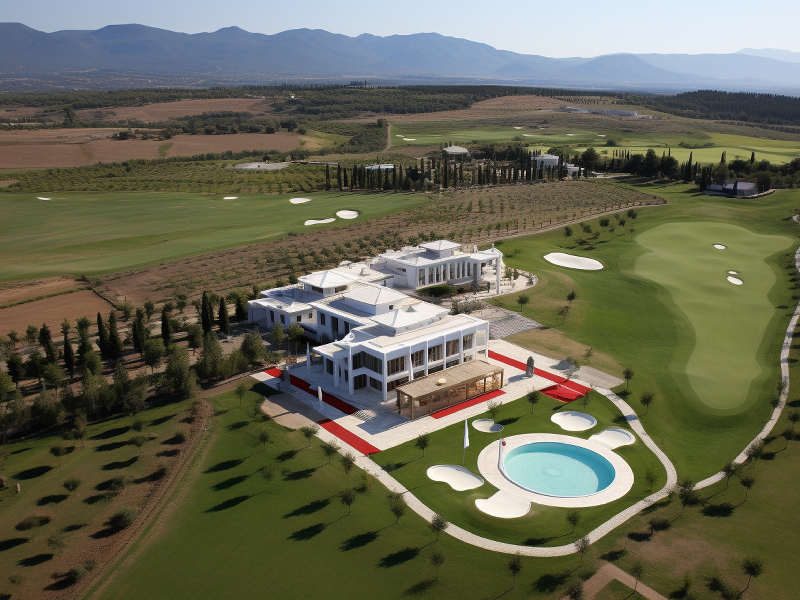
In the sophisticated world of golf course architecture, the most critical elements of a championship-caliber facility often remain entirely hidden from view. At Golf Design India (GDI), we believe that the journey to a flawless scorecard begins long before a player reaches the tee box; it starts with the invisible engineering buried beneath the turf. As a premier golf architecture & construction firm, GDI emphasizes that sub-surface health is the primary driver of surface performance. Led by Vijit, our golf course design architect philosophy integrates advanced hydrological mapping with natural landforms to ensure that every fairway remains firm and every green stays fast, even under extreme conditions. When a golf design architect prioritizes these “silent” foundational systems, the result is a resilient landscape that defies the elements. Furthermore, as a specialized golf course audit firm, we have seen firsthand how neglecting the underground infrastructure leads to long-term operational failure. By choosing a dedicated golf design india team, developers ensure that their investment is protected by a design that works as hard below the surface as it does above. This blog explores why the most successful courses in the world are those where the technical brilliance of the foundation allows the natural beauty of the game to shine.
The brilliance of a world-class fairway is rarely the result of topsoil alone, but rather the complex layers of engineering that support it from below . Within the realm of golf course architecture, the primary goal is to create a playing surface that remains consistent regardless of external weather pressures. At Golf Design India (GDI), our approach starts with a deep dive into the site’s geological profile to determine how water and air will move through the soil. A master golf design architect understands that if the foundation is flawed, the most beautiful turf in the world will eventually fail. We utilize high-specification drainage networks and custom soil mixes to ensure that the “engine room” of the golf course operates at peak efficiency. This meticulous attention to detail is what separates a standard course from a true GDI masterpiece. By focusing on these invisible layers, we provide a stable platform where nature and sport can coexist harmoniously for decades.
Water management is arguably the most significant challenge facing the modern golf architecture & construction firm today . In regions prone to heavy monsoons, the ability to whisk water away from the surface instantly is the difference between a profitable facility and a closed one. Under the technical direction of Vijit, our team designs courses that utilize gravity as the primary driver for drainage, reducing the reliance on costly mechanical pumps. By mapping the natural “highways” of the land, we ensure that runoff is directed into strategic retention lakes that serve as both hazards and irrigation reservoirs. This closed-loop system is a hallmark of the golf design india team and its commitment to environmental stewardship. When the underground plumbing of a course is synchronized with the natural topography, the result is a landscape that recovers from storms in record time. Players experience firm fairways even after a downpour, proving that great design is often what you cannot see.
Every undulation on a green and every curve of a fairway must be purposeful, serving both the strategy of the game and the requirements of the land . As a dedicated golf course design architect, Vijit ensures that the tactical challenges of a course are integrated with its functional needs. We believe that a course should test a player’s skill while simultaneously protecting the turf from localized compaction and water pooling. This requires a sophisticated understanding of how surface geometry interacts with sub-surface drainage tiles. A GDI-designed green complex is a marvel of precision, where subtle slopes hide a high-tech rootzone designed for maximum gas exchange. By balancing these elements, our golf design india team creates environments where the grass thrives and the golfer is challenged. It is this marriage of art and science that defines the high-performance landscapes we are known for crafting.
When a facility begins to show signs of distress, such as thinning turf or chronic wet spots, the issues are almost always buried deep underground . Operating as a specialized golf course audit firm, GDI conducts thorough reviews of existing infrastructures to identify hidden points of failure. We have found that many older courses suffer from “tired” drainage systems that can no longer handle the modern volume of play or increased climatic volatility. Our audit process involves using advanced moisture sensors and 3D topographical mapping to see through the turf and into the foundation. By identifying these sub-surface gaps, we help owners prioritize capital investments that will yield the highest return in terms of playability. A successful audit doesn’t just look at the grass; it looks at the entire life-support system of the course. Correcting these foundational issues is often the first step in a successful renovation or remodeling project.
The lifecycle of a golf course is determined by the quality of the materials and the precision of the construction methods used during its birth . As an integrated golf architecture & construction firm, we maintain strict quality control over every pipe laid and every ton of sand moved. We believe that cutting corners underground leads to astronomical maintenance costs in the future. Therefore, GDI insists on using high-density polyethylene piping and laboratory-tested rootzone materials that meet international standards. This commitment to quality ensures that the course retains its shape and drainage capacity for a generation or more. For the owner, this translates to lower daily operational costs and fewer emergency repairs. For the golfer, it means a course that plays as well in its tenth year as it did on its opening day. Our designs are built to last because they are built on a foundation of uncompromised engineering.
Bunkers are often the most visually striking features of a course, but they are also the most difficult to maintain if not engineered correctly . Our golf course design architect philosophy involves using the “Better Billy Bunker” method to ensure that hazards remain pristine even after heavy rainfall. This technical edge involves a specialized polymer layer that prevents the native soil from contaminating the bunker sand. By controlling the sub-surface environment of the hazard, we eliminate the need for manual “pumping out” after a storm. This attention to detail extends to every bunker shape and artistic contour, ensuring they provide a strong visual impact without becoming a maintenance nightmare. GDI believes that even the most dramatic hazards must be grounded in sound technical principles. This blend of artistry and high-tech construction is what makes our bunkers stand out on the global stage.
Golf Design India (GDI) stands as a beacon of excellence in the subcontinent, having earned the title of the most awarded firm in the country. Under the visionary leadership of Vijit, we have transformed raw landscapes into iconic masterpieces that have received global acclaim. Our brand USP lies in our “Design Dictated by Nature” philosophy, which ensures that every project is environmentally sustainable and economically viable. We take pride in striking the perfect balance between scale, budget, and opportunity, ensuring that every developer’s vision is realized with precision. With a portfolio that includes the complete redevelopment of the historic Lodhi Course at the Delhi Golf Club, our pedigree is unmatched in the region. GDI is not just building courses; we are engineering the future of Indian golf with a focus on quality that passes the test of time.
Our firm offers a complete end-to-end solution for the golfing industry, ranging from initial feasibility studies to long-term maintenance management . The golf design india team consists of engineers, horticulturists, and shapers who bring unparalleled expertise to every acre they touch. Our services include master planning, site supervision, executive course development, and specialized golf course audits . We are deeply committed to building sustainable environments where water is harvested and the natural ecosystem is preserved. By choosing GDI, clients gain a partner who understands the intricacies of the Indian climate and the nuances of international design standards. We continue to strive for excellence, ensuring that every project we undertake sets a new example for sustainable golf development globally.
Sub-surface drainage is the primary mechanism for maintaining a firm and dry playing surface during periods of high rainfall or over-irrigation. Without a properly engineered network of pipes and gravel layers, water becomes trapped in the soil, leading to soft fairways and unhealthy turf roots. This infrastructure allows for the rapid removal of excess water through gravity-fed systems, which prevents the formation of anaerobic conditions in the rootzone. Maintaining these underground systems is essential for preventing long-term damage to the turf and ensuring the course remains playable year-round. Consistent drainage also reduces the need for chemical interventions to treat moisture-related diseases.
A designer improves sustainability by creating a hydrological master plan that harvests and recycles as much natural runoff as possible. By sculpting the land to direct water into retention basins, the architect creates a reliable source of irrigation water that reduces the facility’s dependence on external water sources. This approach also involves selecting drought-resistant turf varieties and designing a high-efficiency irrigation system that targets only the necessary playing areas. Effective water management ensures that the course remains a green sanctuary without depleting local groundwater or over-stressing the municipal supply. Ultimately, sustainable design lowers operational costs while protecting the local environment.
A comprehensive audit evaluates the current health and efficiency of all critical infrastructure, including the irrigation system, drainage capacity, and soil composition. Professionals analyze the performance of the turf and the structural integrity of the bunkers to determine if they meet modern competitive standards. The audit also looks at the “playability” of the layout, checking for strategic flaws or areas where the design has become outdated due to advancements in equipment technology. By benchmarking these factors, a detailed report is produced to guide management in making informed decisions about future renovations or maintenance priorities. This data-driven approach ensures that capital is spent where it will have the most significant impact on the facility’s success.
A professional firm manages impact by implementing “nature-first” principles that preserve the existing topography and local flora during the building process. This involves minimizing the amount of earth moved and ensuring that natural habitats for local wildlife are integrated into the final layout. During construction, silt fences and other erosion control measures are used to prevent soil runoff into local water bodies. The firm also focuses on using sustainable materials and local resources whenever possible to reduce the carbon footprint of the project. By prioritizing ecological balance, the firm ensures that the finished course is a beneficial addition to the regional landscape.
Multiple tee boxes allow a single course to be tailored to the specific skill levels of different golfers, ranging from beginners to touring professionals. By offering various starting points, the design ensures that every player faces a challenge that is appropriate for their driving distance and accuracy. This inclusivity makes the game more enjoyable for all members of the community and helps to speed up the pace of play. It also allows the course to host a wide variety of events, from casual family outings to high-stakes championship tournaments. Providing these options is a fundamental aspect of modern design that promotes the growth and long-term health of the sport.