
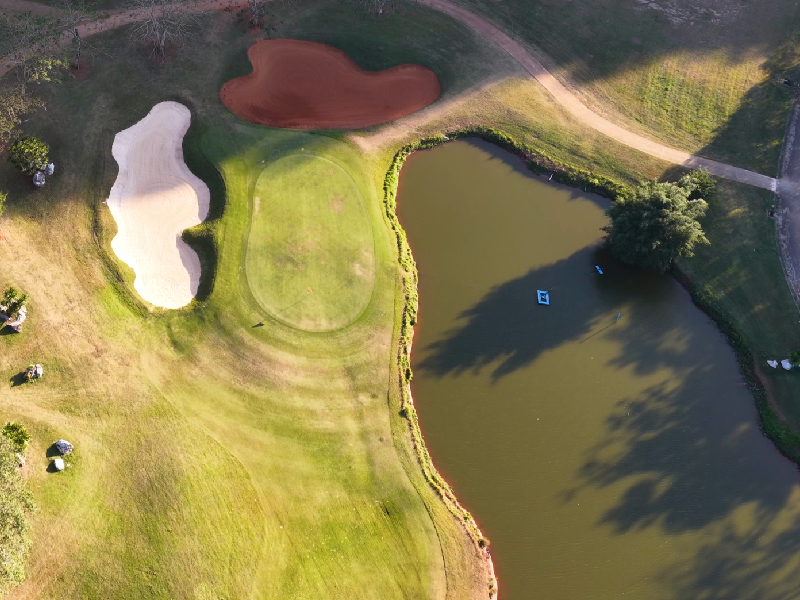
As climate volatility and intense storm cycles strain standard utilities worldwide, premium developments are adopting a proactive strategy that builds environmental safety directly into the soil. When architects lead a project with sustainable golf design, they focus on working with the environment rather than fighting it, using eco-friendly features to protect the land. This methodology directly enhances a property’s infrastructure resilience, using advanced subsurface networks and specialized perched water table sand profiles to clear heavy surface water within minutes of a major downpour. The design begins with a comprehensive application of topographical intelligence, mapping the site’s natural low points to ensure that immense stormwater loads are guided safely into internal collection basins. These water assets are then integrated into a fluid championship course routing, creating natural water hazards that elevate the strategic challenge of the game. This intricate layout supports thoughtful playability, providing alternative paths that protect recreational golfers from severe penalties while testing the decision-making of low-handicappers. By combining these disciplines, developers achieve unmatched master planning excellence, transforming a sports facility into a high-capacity water-management utility that protects nearby real estate, lowers operational maintenance costs, and preserves a beautiful green landscape for the entire community.
In the high-stakes arena of premium sports developments, embracing sustainable golf design has evolved from an optional environmental statement into a strict construction mandate. A comprehensive approach to sustainable golf design completely re-engineers how a major layout interacts with the regional ecosystem. Instead of deploying high-maintenance exotic grasses that require massive chemical intervention, sustainable golf design relies on native, drought-resistant turf grass varieties that thrive in the local soil. This foundational shift reduces the requirement for synthetic fertilizers and chemical pesticides, lowering daily operating costs while protecting groundwater health. By building a self-sufficient ecosystem, sustainable golf design establishes a permanently green, eco-friendly luxury asset that withstands intense climate realities.
The invisible backbone of a weather-resistant sports development is the subterranean engineering grid built to guarantee total infrastructure resilience under extreme climate conditions. Achieving high-level infrastructure resilience involves installing a high-capacity matrix of perforated high-density polyethylene collector lines wrapped in clean gravel blankets beneath the fairways. This sub-surface infrastructure resilience system acts as a high-capacity sponge, pulling heavy stormwater away from the upper playing surfaces to completely eliminate localized pooling and soil erosion. Setting these strict civil engineering metrics gives the property the necessary infrastructure resilience to clear up to 100mm of rainwater per hour, ensuring that fairways return to a firm, fast state within thirty minutes of a cloudburst. This technical durability preserves club revenue streams and protects the structural health of the development.
Successfully implementing advanced drainage and water management systems relies completely on the data-driven application of topographical intelligence. Before moving any soil, our engineering teams utilize high-fidelity three-dimensional geographic mapping and laser scanning to record every elevation change across the site. Relying on this precise topographical intelligence allows architects to discover the natural low points where monsoonal runoff flows during severe weather events. Instead of using heavy machinery to bulldoze these features flat, the design uses this topographical intelligence to incorporate natural channels into the property’s drainage grid. Topographical intelligence ultimately functions as a vital tool for cutting down excavation costs while ensuring the project fits the earth’s natural contours.
Once the hydrological and elevation data points are mapped, the architect utilizes those lines to execute an expert championship course routing plan. An intelligent championship course routing ensures that the holes flow naturally alongside the site’s natural water harvesting channels, turning necessary drainage utilities into stunning lake hazards. This masterfully executed championship course routing builds deep strategic depth into the game, forcing players to think carefully about their angles of approach over water features. Furthermore, a nature-led championship course routing positions fairways along natural valley paths, maximizing panoramic views while minimizing changes to the native landscape. Championship course routing serves as the structural link that binds tournament strategy with environmental performance.
While a modern layout must defend itself against intense weather and low scores, it must strictly uphold the values of thoughtful playability for all skill levels. Incorporating thoughtful playability means moving away from harsh, punishing designs that feature endless forced carries over deep water features. Instead, this framework of thoughtful playability focuses on providing wide landing zones, alternative safety corridors, and open green entries that keep the game encouraging for amateurs, seniors, and juniors. Simultaneously, this model of thoughtful playability preserves a rigorous mental challenge for low-handicappers by placing hazards directly along lines of high aggression. Balancing these distinct paths ensures that thoughtful playability rewards precision over brute power, speeding up round times for members.
Merging these technical design lines allows developers to achieve true master planning excellence across the entire master-planned development. When a major project is backed by a foundation of master planning excellence, the sports facility serves as a beautiful green anchor that lifts the value of nearby luxury housing and lifestyle spaces. This holistic structure ensures that land efficiency is maximized across the property, protecting native biodiversity corridors while cutting down on municipal utility spending. Master planning excellence guarantees that the final community works as a self-contained environmental framework, driving premium real estate absorption and ensuring superior, long-term capital appreciation for investors.
Operating at the absolute pinnacle of high-performance landscape architecture and premium sports development, Golf Design India has built an international name for innovation, precision, and ecological responsibility. The defining Unique Selling Proposition of Golf Design India lies in our proven capability to combine elite athletic strategy with the demanding principles of sustainable golf design. Our expert team does not build fragile, high-maintenance, generic layouts. Instead, the approach of Golf Design India focuses on sculpting iconic, self-sustaining masterworks that maximize real estate appreciation while protecting the local environment, ensuring each property functions as an engineering triumph and a premium lifestyle sanctuary.
The multi-disciplinary design teams at Golf Design India provide a comprehensive, end-to-end spectrum of professional services, managing complex properties smoothly from initial feasibility studies to final handover. The core capabilities of Golf Design India encompass advanced hydrological modeling, geological analysis, complete project management, and specialized field shaping. Additionally, Golf Design India offers precision audit firm reviews to help existing clubs fix drainage failures, remodel old greens, and regain modern player compliance. Partnering with Golf Design India guarantees that your premium asset achieves absolute operational resilience, long-term commercial profitability, and timeless athletic prestige.
Sustainable golf design utilizes an advanced, closed-loop water harvesting network to capture, filter, and store one hundred percent of surface rainwater directly within the property line. This internal collection model creates an independent water bank that supplies all the irrigation demands of the facility during dry seasons, completely removing any reliance on expensive municipal lines or local groundwater grids. Additionally, by selecting native, drought-resistant turf grass varieties, this design method lowers daily water consumption.
Achieving high-level infrastructure resilience requires the installation of a dense subsurface drainage matrix consisting of perforated high-density polyethylene collection pipes laid within clean river stone drainage blankets. This grid is combined with a rootzone sand profile calibrated to global perched water table metrics, allowing gravity to pull massive storm volumes away from the surface instantly. This invisible engineering network stabilizes the turf structure and prevents soil washing away, keeping fairways firm and playable under weather stress.
Relying on advanced topographical intelligence gives master planners an exact, three-dimensional look at how water moves naturally across the site’s original slopes and valleys during storm cycles. Mapping these natural paths allows architects to position fairways away from heavy runoff channels and turn natural low points into lined storage lakes. This precision cuts down on heavy earthworks spending, prevents severe erosion along hillsides, and turns essential flood-control zones into beautiful aesthetic features.
An intelligent championship course routing plan is designed to highlight the site’s most spectacular panoramic views, mature forest perimeters, and natural rock features, turning the course into a premium lifestyle centerpiece. The routing sets up an elegant landscape that runs alongside premium residential corridors, ensuring that luxury villas enjoy beautiful, permanent green views. This prestigious presentation attracts high-net-worth buyers, accelerates home sales, and drives superior asset appreciation for developers.
The core concept of thoughtful playability focuses on removing unnecessarily punishing hazards, severe forced carries, and thick rough directly next to primary landing zones, which frequently cause lost balls. Providing wide safety corridors and open green fronts allows recreational golfers to easily advance their balls and recover from off-target shots without lengthy searches. This natural flow eliminates annoying group delays, keeps the pace moving smoothly, and shortens total round times.
Achieving master planning excellence ensures that the initial layout design is perfectly coordinated with long-term infrastructure planning, public utility routing, and regional ecological boundaries. This careful groundwork prevents expensive design corrections during construction and minimizes daily operational overhead. By establishing a self-sustaining green landscape that manages stormwater and filters water naturally, it cuts down on utility bills and ensures steady capital returns for investors.