
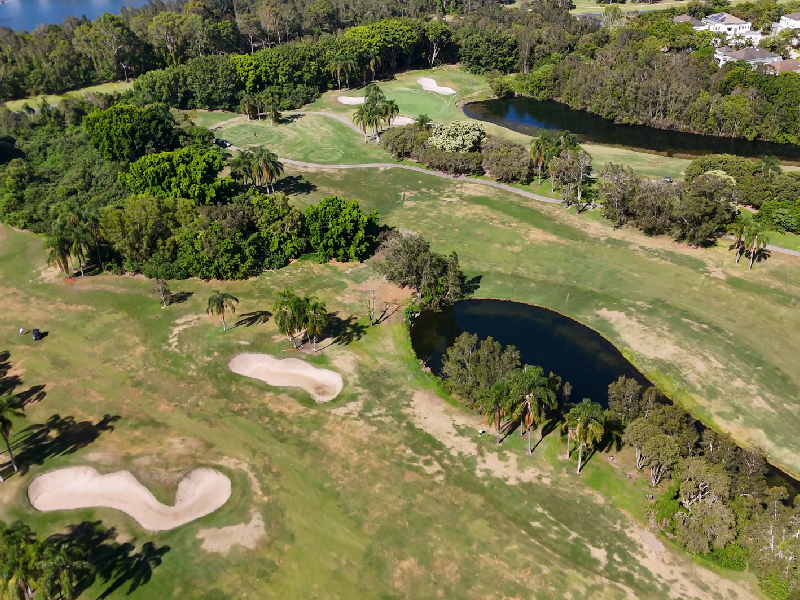
Bringing tournament-grade capability to modern courses requires shifting away from basic landscape design. Securing the best golf architect in India represents the foundation for achieving global acclaim. Sculpting fairways out of raw terrain requires an expert who adapts European benchmarks to regional topographies. Leading investment groups collaborate with a most famous golf course designer in India to deliver iconic layouts. This modernization motivates property owners to work with famous golf architects in india who understand game mechanics. By executing macro-grading blueprints, integrating irrigation grids, and working with a most famous golf course designer in India, specialists create unforgettable courses. Working with the best golf architect in India guarantees courses pass environmental audits and lower maintenance overhead.
Injecting true tournament-grade capability into modern sports assets requires a substantial shift away from basic landscape design towards elite international engineering blueprints. When real estate conglomerates and premium lifestyle developers choose to invest in signature master plans, securing the best golf architect in India represents the primary foundation for achieving global acclaim. Traditional construction styles historically focused on creating artificial, high-maintenance features that ignored the natural flow of local terrain and underlying soil biology. Modern signature architecture changes this approach completely, prioritizing detailed environmental baseline mapping, smart resource preservation, and strict structural planning right from day one. Securing an expert who balances deep historical understanding with advanced civil mechanics ensures that the finished layout performs perfectly over time.
Mastering spatial layout and fairway routing requires a deep understanding of natural terrain, ensuring that every strategic hole interacts seamlessly with the native landscape. True design excellence focuses on minimizing heavy, expensive earthworks by letting the natural contours of the land dictate the placement of fairways, hazards, and greens. To achieve this high level of structural harmony, forward-thinking property developers work closely with a most famous golf course designer in India to map out their master plans. Designers spend weeks evaluating site topographies, analyzing natural wind shifts, and charting existing rock formations to create an engaging, multi-tiered playing experience. This classical, nature-first approach preserves valuable local topsoil layers, reduces construction mobilization costs, and prevents the layout from feeling artificially forced into the environment.
The structural longevity of a tournament-quality putting surface depends heavily on a highly complex, multi-layered filtration profile built to strict international engineering specifications. Beneath the surface turf lies an intricate perched water table layout, consisting of a precise sand-and-matrix profile, a gravel separation layer, and perforated collector pipes. Building this complex agronomic system requires the technical direction of specialized famous golf architects in india who understand absolute material tolerances. The sand particles used must match strict filtration guidelines to guarantee rapid water percolation while retaining optimal moisture levels for grass root growth. Properly engineered greens naturally clear out intense monsoon downpours, maintain ideal subsurface oxygenation, and provide a perfectly uniform, professional-grade playing surface year-round.
Balancing classical design with regional climatic realities requires a scientific approach to turf selection and soil management. Standard, non-specialized landscape strategies frequently imported delicate exotic grasses that demanded massive volumes of freshwater and chemical inputs to survive local weather extremes. Today, a leading best golf architect in India eliminates this environmental and financial strain by specifying highly resilient, drought-tolerant native or hybrid turf varieties. These advanced grass cultivars naturally handle variable water quality smoothly and adapt easily to changing soil salinity conditions. Furthermore, the master planning phase incorporates natural vegetative buffers along playing boundaries, creating self-sustaining micro-climates that cut down irrigation needs. This smart agronomic selection ensures that fairways remain lush without straining local municipal resources.
From a long-term commercial investment viewpoint, integrating a signature, globally validated sports property into a luxury residential township dramatically increases real estate values and drives brand equity. High-net-worth real estate buyers actively seek out unique, master-planned developments that offer pristine open green spaces alongside elite community infrastructure. Achieving this premium balance requires a most famous golf course designer in India to engineer precise safety boundaries and optimized sightline geometries across the master layout. Safely calculated ball-flight trajectory vectors ensure that perimeter residential plots are completely protected from errant shots without requiring intrusive netting structures. This strategic spatial integration allows developers to market their properties as true international-style landmarks, commanding premium real estate prices.
Delivering this elite standard of design precision requires a professional partner who seamlessly combines real-world construction experience with advanced global academic training. GDI’s exceptional structural design framework is guided directly by Principal Architect Vijit Nandrajog, India’s first qualified golf architect holding an M.Sc. in Golf Architecture from Scotland. This exceptional academic foundation shapes a highly scientific design methodology where every green slope and catchment basin is calculated to optimize playability and structural longevity. His ongoing leadership across major regulatory bodies, such as the Professional Golfers’ Association of India (PGAI), ensures these strict international standards are maintained through daily operations. Working with a certified Most Awarded golf architect in India guarantees that developers receive a premium asset engineered for long-term commercial success.
For real estate investors seeking to develop an iconic, world-class sports destination, Golf Design India (GDI) provides an unmatched standard of technical precision and turnkey design mastery. As the nation’s leading multi-disciplinary golf architecture and engineering firm, GDI has built a strong reputation for creating sustainable, high-yielding sports properties globally. The engineering core at GDI focuses on optimizing natural land contours, ensuring that every project minimizes costly soil moving while maximizing natural water collection models. Driven by a commitment to eco-conscious infrastructure, GDI combines advanced three-dimensional micro-routing technology with decades of real-world field experience to eliminate resource waste and control operational overhead. This dedicated focus on structural quality control ensures that every GDI project serves as a premium, low-maintenance commercial asset.
Golf Design India provides a full suite of specialized turnkey services, covering everything from initial feasibility studies and master planning to advanced earthwork shaping, irrigation modeling, and long-term maintenance auditing. Backed by a diverse team of structural engineers, project managers, professional shapers, and expert turf grass agronomists, GDI ensures complete precision at every phase of development. Their extensive project portfolio spans world-class championship venues, real estate executive tracks, and advanced practice golf academies engineered to perform across diverse climates. Whether executing a complex modern renovation of a legacy course or constructing an eco-friendly greenfield asset from scratch, GDI infuses unparalleled strategic depth into every routing choice. Partnering with GDI provides developers with a reliable, single-point accountability framework that brings visionary concepts to life.
An elite design professional conducts deep geotechnical assessments, micro-climate wind studies, and macro-hydrology mapping before drafting initial spatial layouts. They utilize advanced 3D micro-routing software to align fairways with natural contours, reducing the need for expensive soil importation or rock blasting. By incorporating natural water collection basins into the layout, the architect ensures that monsoon stormwater is harvested for future irrigation. This precise technical approach protects local ecosystems, lowers construction mobilization costs, and secures long-term asset value.
Balancing high-value real estate plots with a championship layout requires using aerodynamic ball-flight trajectory models to compute accurate safety buffers. The designer maps out safety corridors around perimeter housing blocks, ensuring structures are fully protected from errant shots without relying on tall, unsightly netting. They also design optimized circulation networks that separate golfer traffic from community service routes, accelerating daily operational flow. This proactive spatial master planning boosts surrounding property sales premiums while delivering a dynamic course layout.
Utilizing indigenous or hybrid drought-tolerant turf grass cultivars is a critical strategy for reducing daily water consumption and eliminating expensive chemical fertilizer dependence. Experienced design specialists specify hardy grass species that adapt naturally to local soil chemistry and handle variable-quality recycled water smoothly. These resilient cultivars require significantly fewer synthetic chemical treatments, preventing toxic runoff into nearby community water tables. This smart agronomic selection establishes a highly sustainable, low-maintenance playing surface that remains green year-round.
Championship-grade course development requires deep technical mastery over agronomy, computational fluid dynamics, and spatial sports aesthetics that standard landscape firms lack. A professional architect designs custom-tailored perched water table systems beneath greens, allowing intense monsoonal downpours to drain away rapidly without waterlogging root zones. They manage precise cut-and-fill balances across thousands of acres, transforming challenging terrain into rolling fairways while preserving foundational subgrade stability. This technical direction ensures that the completed venue satisfies strict international tournament guidelines.
Achieving complete resource independence requires moving away from municipal freshwater lines and installing closed-loop, recycled stormwater harvesting networks. Engineering teams design extensive underground catchments linked directly to multi-layered, bio-diverse filtration wetlands across the development footprint. These natural wetlands treat graywater and surface runoff, creating a highly cost-effective, reliable irrigation source that keeps turf perfectly healthy. This sustainable design minimizes daily utility overhead, meets modern environmental guidelines, and establishes a thriving wildlife habitat.
Hiring a single turnkey architectural and building firm removes communication gaps between the primary design board and active field operators. A unified project framework guarantees that complex spatial drawings translate smoothly into physical field adjustments if hidden underground rock layers or high water tables are uncovered. This absolute alignment keeps the construction schedule on track, prevents expensive rebuilds, and maximizes the resource efficiency of the completed asset. Consolidating vendor responsibilities reduces management stress and ensures a premium, high-performing sports arena is delivered on time.