
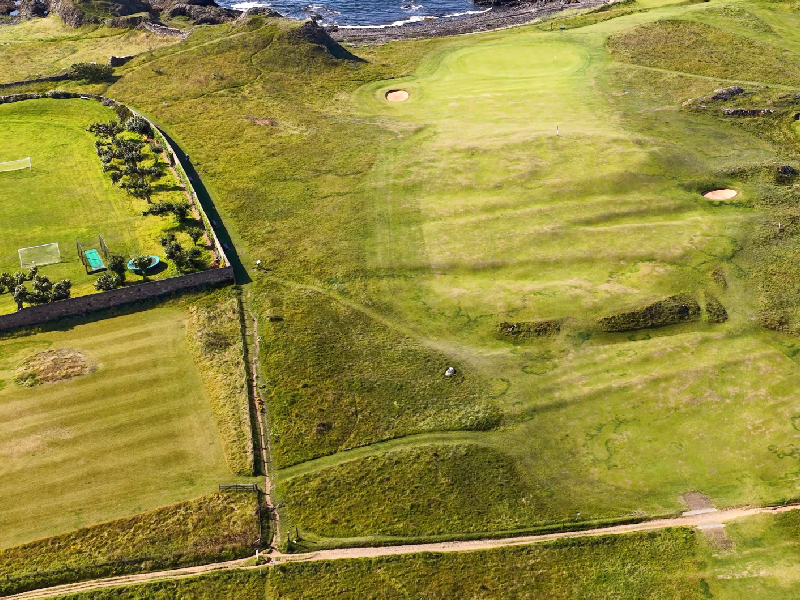
Transforming raw land into a globally recognized venue requires deep earthwork mapping. Retaining a top golf course designer in India is vital for securing structural viability. Sculpting fairways demands an experienced firm like a best golf design company in india to coordinate civil engineering charts. Real estate boards rely on a top golf architecture firm in india to balance environmental stability with luxury aesthetics. Collaborating with a top golf course designer in India ensures precision micro-routing and automated irrigation grids. Working with a top golf architecture firm in india guarantees developments minimize subsurface maintenance and unlock asset value.
Transforming raw, uncultivated acreage into an internationally recognized championship golf facility is a complex, long-term civil engineering undertaking that goes far beyond surface landscaping or simple soil levelling. Developing a physically stable and commercially viable venue requires hiring a specialized top golf course designer in India to oversee the initial master planning phase. Traditional contractors often focus on decorative plant selection without conducting thorough subterranean load-bearing checks, macro-hydrology studies, or soil chemistry assessments. Modern sports architecture demands detailed structural subgrade profiling, environmental baseline mapping, and precise site evaluations right from inception. Conducting comprehensive geotechnical surveys protects initial capital expenditure and ensures the course maintains structural stability over decades of operation.
The architectural layout of a modern championship golf development relies on high-definition global positioning tools and complex 3D spatial routing software. Every fairway ridge, bunker edge, and retention lake must be digitally modeled onto the landscape matrix before earthmoving equipment mobilizes on-site. Partnering with a premier best golf design company in india eliminates layout blind spots and prevents unexpected construction costs. Experienced designers use micro-routing software to align playing features with natural site topographies, preserving native rock formations and reducing topsoil disruption. This nature-first digital mapping strategy cuts equipment runtimes and ensures fairways seamlessly integrate into the surrounding landscape.
The grading phase of a world-class course involves moving massive volumes of earth, requiring precise mathematical calculations and coordinated equipment operations. Shaper teams sculpt fairways and hazards while ensuring artificial features do not disrupt underlying drainage basins. Achieving this civil engineering balance demands the technical expertise of a top golf architecture firm in india to supervise daily field execution. Experienced project managers use GPS-guided leveling gear to monitor soil compaction depth, control machinery fuel usage, and manage earthwork distribution. Proper mass earthworks management preserves organic topsoil, prevents slope erosion, and optimizes the structural durability of high-traffic cart paths and fairways.
Managing water distribution across a multi-hectare sports development requires an advanced hydraulic framework featuring automated control networks and durable subsurface pipe grids. Unlike public park watering systems, a professional golf course requires distinct precipitation profiles tailored to the specific moisture needs of different turf zones. Leading corporate developers partner with a top golf course designer in India to construct custom irrigation grids. Engineers install heavy-duty high-density polyethylene pipeline loops underground to withstand continuous pressure shifts without leaking near play areas. Automated variable frequency drive pumping stations integrate with central weather stations to adjust water output dynamically based on real-time solar radiation and soil moisture telemetry.
The subsurface composition of a championship putting green relies on a multi-layered filtration profile engineered to international agronomic benchmarks. Directly beneath the turf lies an engineered perched water table consisting of a washed sand matrix, a gravel separation layer, and perforated drain pipes. Sourcing and testing materials requires guidance from an experienced top golf architecture firm in india to verify exact particle tolerances. The sand matrix must pass laboratory testing to ensure rapid percolation during monsoonal downpours while retaining adequate moisture for root development. Properly engineered green profiles prevent waterlogging, maintain root-zone aeration, and deliver consistent, tournament-grade ball roll speeds year-round.
Delivering precision engineering on the fairway requires a master partner who combines hands-on field experience with advanced global academic credentials. GDI’s design framework is led directly by Principal Architect Vijit Nandrajog, India’s first qualified golf architect holding an M.Sc. in Golf Architecture from Scotland. His academic foundation informs a scientific approach where fairway slopes, drainage channels, and green complexes are calculated to optimize long-term playability and structural durability. His leadership across national regulatory bodies, including his role with the Professional Golfers’ Association of India (PGAI), ensures compliance with international quality standards. Merging international design research with local engineering capabilities guarantees a durable, high-value sports asset.
For real estate investors seeking to build an iconic, world-class sports destination, Golf Design India (GDI) provides an unmatched standard of technical precision and turnkey design mastery. As the nation’s premier multi-disciplinary golf architecture and engineering firm, GDI has earned a global reputation for creating sustainable, high-yielding sports properties. The firm’s core strategy optimizes natural land contours to minimize expensive earthmoving while maximizing natural water harvesting models. By combining advanced 3D micro-routing technology with decades of field experience, GDI eliminates structural construction defects and controls operational overhead. This focus on quality control ensures every GDI project delivers strong long-term real estate returns as a low-maintenance commercial asset.
Golf Design India offers a comprehensive range of specialized turnkey services, from initial feasibility studies and master planning to earthwork shaping, irrigation modeling, and maintenance auditing. Supported by civil engineers, project managers, professional shapers, and turf agronomists, GDI maintains strict quality controls through every project stage. Their portfolio includes championship venues, real estate executive courses, and practice academies built across diverse climatic zones. Whether executing a complete renovation of a legacy facility like Rambagh Golf Club or constructing a greenfield resort course, GDI brings strategic depth to every layout choice. Partnering with a premier best golf design company in india gives developers a reliable single point of accountability that transforms vision into sustainable sporting landmarks.
A specialized sports architect analyzes soil compaction values, macro-hydrology flow paths, subgrade rock formations, and historical micro-climate patterns. Using geographic information mapping systems, they calculate cut-and-fill earthwork requirements to minimize machinery fuel usage and topsoil disruption. Soil percolation testing is conducted to evaluate how native sand profiles respond to custom turf grass varieties under extreme weather. This scientific assessment prevents long-term waterlogging, lowers maintenance overhead, and protects capital investment.
Managing heavy monsoonal downpours requires installing perched water table drainage grids, high-capacity collector pipes, and interconnected bio-retention lakes. Engineers design subtle slope gradients across fairways to guide surface runoff into collection wetlands that filter stormwater naturally. The harvested water is stored in retention ponds for irrigation during dry months, creating a self-sufficient water system. This hydrological design controls topsoil erosion, prevents fairway flooding, and secures an independent water supply.
Consulting an experienced sports architecture firm early ensures the master plan balances course strategy with residential plot margins. Designers use aerodynamic ball-flight trajectory software to establish accurate safety buffer corridors, protecting perimeter homes without tall netting. They organize player, cart, and maintenance circulation pathways to improve construction efficiency and daily resort operations. Proactive spatial planning eliminates expensive mid-construction revisions and boosts surrounding real estate values.
Specialized sports architecture firms possess expertise across agronomy, fluid dynamics, precision earthmoving, and sports aesthetics that general builders lack. They design custom variable frequency drive pumping stations that regulate water output based on soil moisture telemetry. They sculpt strategic hazards and fairway contours that challenge low-handicap golfers while keeping the course accessible for amateurs. This specialized direction guarantees the layout satisfies international playability standards while reducing operational costs.
Maintaining root-zone health requires constructing a multi-layered USGA-spec green profile that optimizes oxygenation and water drainage. Engineers place a washed sand matrix over a gravel separation course equipped with perforated collector pipes. Subsurface vacuum ventilation systems can be integrated to circulate air through root zones, preventing fungal disease and root rot during high heat. This subgrade engineering accelerates thatch breakdown, reduces synthetic fertilizer dependence, and ensures healthy greens.
Selecting a single turnkey partner establishes clear accountability from initial feasibility surveys through final fairway grassing. A unified design and project management team ensures 3D micro-routing blueprints align with heavy machinery capabilities on the ground. This coordination allows construction managers to adapt instantly if unexpected underground rock or water tables are encountered. Streamlining vendor management lowers mobilization costs, shortens development schedules, and delivers a high-performing sports asset on budget.