
The most memorable golf courses in the world are not those that impose themselves on the land, but those that seem to have been there forever. Integrating natural features—such as existing lakes, mature trees, and rolling hills—is a hallmark of elite golf course design. This blog explores how a “minimalist” approach to golf course construction can simultaneously enhance the course’s aesthetic beauty and strategic challenge. Beyond the visual appeal, working with the land’s original character is a powerful way to reduce construction costs and minimize environmental disruption. By partnering with a visionary golf course architect, developers can transform a site’s unique geography into a “signature” golfing experience that feels authentic, timeless, and ecologically responsible.
Modern golf course design has moved away from the “industrial” style of the late 20th century, where land was flattened and rebuilt from scratch. Today, the focus is on naturalistic design, where a golf course architect identifies the site’s most compelling assets before the first shovel hits the ground . This philosophy views the land not as a blank canvas, but as a partner. By identifying and protecting rocky outcrops, native grasslands, or ancient riverbeds, the architect creates a course that has an immediate “sense of place” and a unique identity that cannot be manufactured .
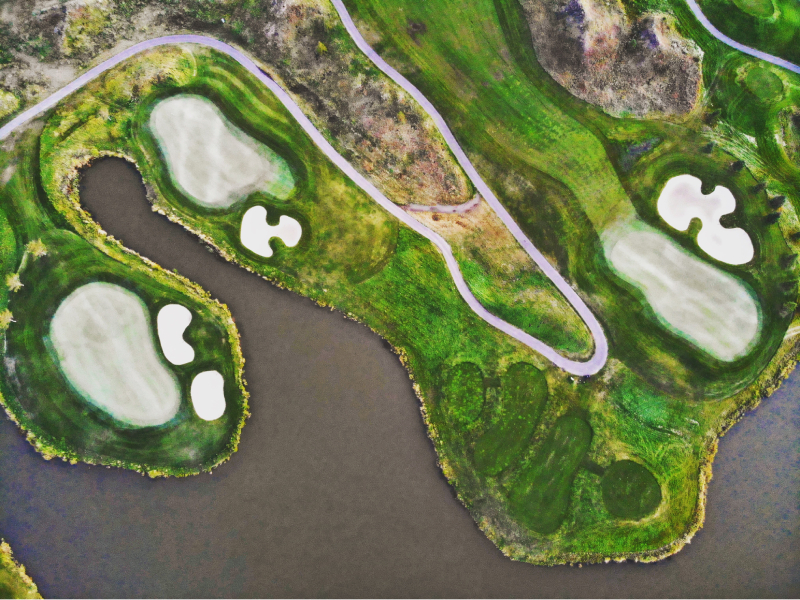
Existing natural lakes and ponds are among the most valuable assets during golf course construction. From a strategic standpoint, water hazards provide an instant “risk-reward” element, forcing players to make critical decisions on their approach shots . From a sustainability perspective, natural water bodies often act as ready-made reservoirs for the course’s irrigation system. By integrating these features rather than filling them in and digging new ones, developers save on massive excavation costs and preserve local aquatic ecosystems that are already established .
A single 50-year-old banyan or oak tree can do more for a course’s “prestige” than thousands of dollars in new landscaping. Mature trees serve several functions: they “frame” the holes, providing clear targets for the golfer, and they act as natural vertical hazards . During the construction phase, a professional golf construction firm will mark “tree protection zones” to ensure that heavy machinery does not compact the soil around the roots. Preserving existing canopy cover also provides essential shade, which reduces the “heat island” effect and improves the microclimate for the turf .
The most exciting shots in golf involve changes in elevation. Natural hills and ridges provide ready-made “blind shots,” uphill challenges, and dramatic downhill vistas . When a golf course architect routes a hole over natural undulations, it creates a “variety of lies” that tests a player’s skill far more than a flat, artificial fairway. Relying on the natural topography also ensures better surface drainage, as the water follows the land’s original paths, reducing the need for extensive man-made piping .
Perhaps the most compelling reason to integrate natural features is the bottom line. Bulk earthmoving (moving dirt from one place to another) is often the single most expensive item in a golf course development plan . Every hill that is left standing and every natural depression used as a bunker or lake means less fuel, less labor, and less time for heavy machinery. By working with the land’s existing “cut and fill” balance, developers can significantly reduce the overall construction costs while actually increasing the final value of the property .
The challenge during the build phase is balancing “preservation” with “playability.” Not every tree or hill can stay if it interferes with the safety of the players or the sunlight needed for the grass to grow . This is where expert technical supervision is required. The architect and the project manager must decide which features are “strategic assets” and which are “operational liabilities.” This careful filtering process ensures that the final course feels wild and natural, but functions with the efficiency of a modern championship facility .
At Golf Design India, our core philosophy is “Design Dictated by Nature.” We believe that the best architectural solutions are already written in the landscape . Our team excels at identifying hidden gems in a piece of land—whether it’s a dry creek bed that can become a strategic hazard or a ridge line that offers a perfect tee location. By integrating these natural features into our designs, we deliver courses that are environmentally sensitive, cost-effective to build, and visually breathtaking. We don’t just build on your land; we celebrate it .
Do you have a site with unique natural character? Don’t bulldoze the very features that could make your course legendary. Let GDI help you weave the beauty of your land into a world-class golfing destination that saves you money and respects the environment.
See how we integrate nature into our designs: Golf Design India – Naturalistic Course Design
Yes, significantly. The most expensive part of golf course construction is moving large amounts of earth with heavy machinery. If you use an existing hill for a tee box or a natural hollow for a pond, you don’t have to pay to build them from scratch. This reduces fuel costs, labor time, and the need for expensive soil stabilization.
Often, yes. Existing lakes can serve as the primary source of water for the course, provided you have the proper legal permits. However, the water quality must be tested to ensure it’s safe for the grass. If the lake is deep enough, it can also act as a natural drainage basin to collect rainwater for reuse.
This is a common concern. While trees add beauty, they also create shade and block wind, which can lead to turf disease. A professional golf course architect will carefully select which trees to keep based on the sun’s path. They may prune the lower branches to allow “air circulation” or remove less healthy trees to ensure the greens get the 6 to 8 hours of direct sunlight they need to thrive.
Protection starts with a clear plan. Before any machinery arrives, the construction team should install physical barriers (silt fences or orange snow fencing) around “non-disturbance zones.” This prevents tractors from driving over tree roots or dumping waste into natural lakes. Regular site inspections ensure the crew respects these boundaries throughout the build.
Even a flat site has “subtle” features. An expert architect can accentuate small changes in elevation to create interest. If the land is truly featureless, the architect can use the soil dug out from the new irrigation lakes to create “man-made” hills and mounds. This is called “balancing the site,” where you use the natural materials you have to create the character you need.